
Treasure Hiding
A Question? for the artist Jane Thurley on the significance of memory and remembrance in her work and research.

Words by Jane Thurley
In February 2021, just days after his 101st birthday, my grandad died of Covid. We were still in lockdown so there could be no family funeral, but there was a home and a garden to clear. I asked for my granddad’s homemade pots, and when the van carrying these arrived in London, my mum had added a ceramic planter from his garden, still containing soil. Lack of time and good fortune meant I left his soil in place and soon after a brilliant orange crocus appeared, a monarch (I have since planted many more) followed, in the summer, by a deep red hollyhock. In the intervening years, this same pot of soil has started to grow forget-me-nots, valerian, and a small holly tree, self-sewn from our garden. This soil, which contained my grandad’s touch and was, in many respects, a microcosm of his own garden is now interwoven with our own.
Tending soil is like touching the past. There’s a sense you might disturb its fragile history, especially when the person who touched it last is no longer around. Making a garden is, in part, a way of negotiating this fragility and living alongside the past; the people and places we have known find form in the plants we chose to grow; love-in-a-mist takes me straight back to gathering their hairy seed heads with my grandma, and collecting sweet peas, to my first childhood garden. There are also seedlings and cuttings inextricably linked to the places they once grew, and the people who gave them to me. Every garden is part of a massive extended family.
It doesn’t seem possible to think about the garden’s capacity to interconnect people, places and the past without mentioning Derek Jarman. Last summer I read his two journals, Modern Nature (1991) and Smiling in Slow Motion (2018). Both slip between past and present; Jarman grows the plants he learnt about as a boy, applying a knowledge of horticulture which takes him back to the significant people, places and experiences of his past. Jarman also records his determination to garden the formidable, soil-less landscape of Dungeness. He didn’t approach garden making as a battle with nature though, or even a gentle attempt to domesticate and tame. One of my favorite passages in Modern Nature tells of an eccentric old gardener who, as he and Jarman walked together, casually shot down the crows circling above. In his typically understated tone, Jarman describes this gardener as having, ‘an uneasy’ relationship with nature’. In contrast, the garden at Prospect Cottage reflected the essence of its wider nature, where the resistance of this landscape to being gardened became a positive element. The salt spray and extreme wind distorted and twisted the native and non-native plants which came to resemble the rusted and weathered objects they grew alongside.
I think there’s a relationship between accepting the innate nature of the space you garden and experiencing the garden’s ability to interconnect places and time. Both require, and enable, a kind of immersion into an alternative pace. Here the garden becomes a physical and psychological refuge; a home in itself. Time moves in cycles; decay and death aren’t final and there’s a continual sense of looking forward. There’s a feeling of what could be. For Jarman, the garden suggested an alternative to the tragic inevitability of his failing health; he planted for the future and soaked up the excitement of each new season. The garden provides an alternative kind of inevitability; semi-autonomous and governed by growing seasons, the plants will power on regardless and come to personify a sense of optimism.
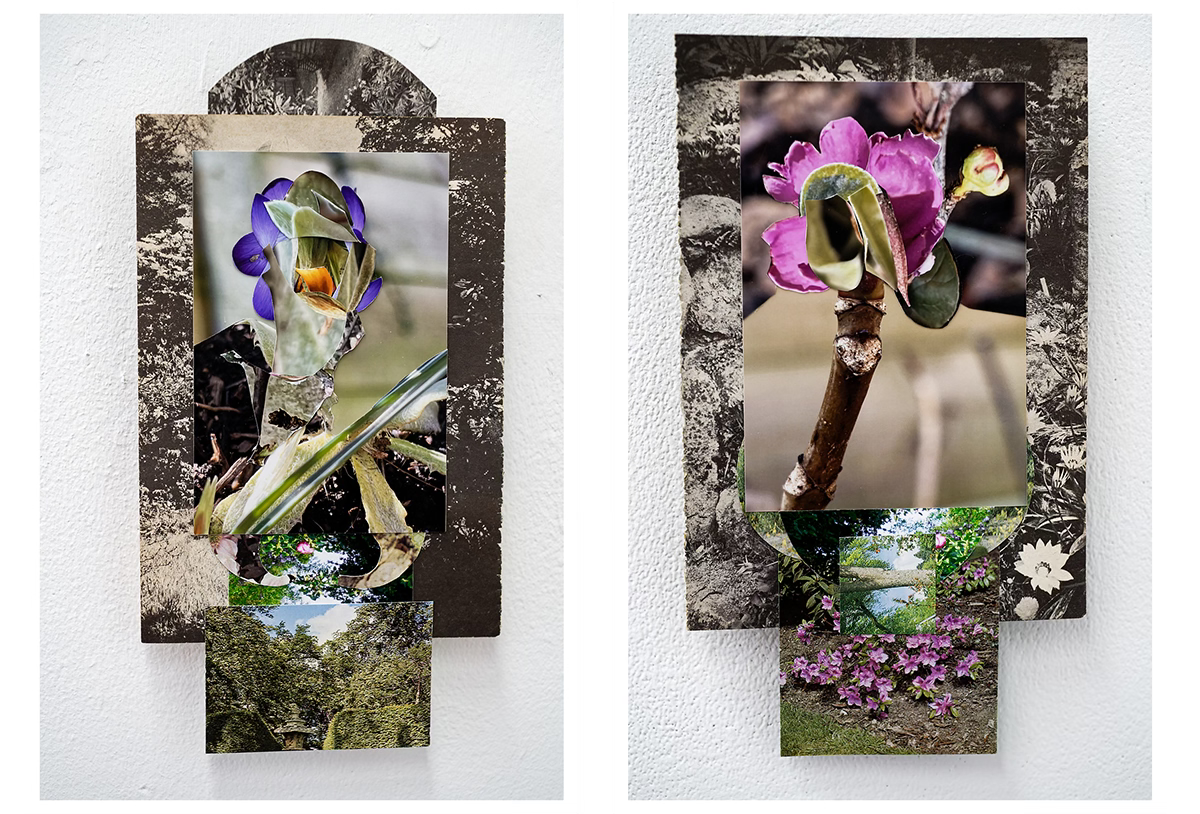
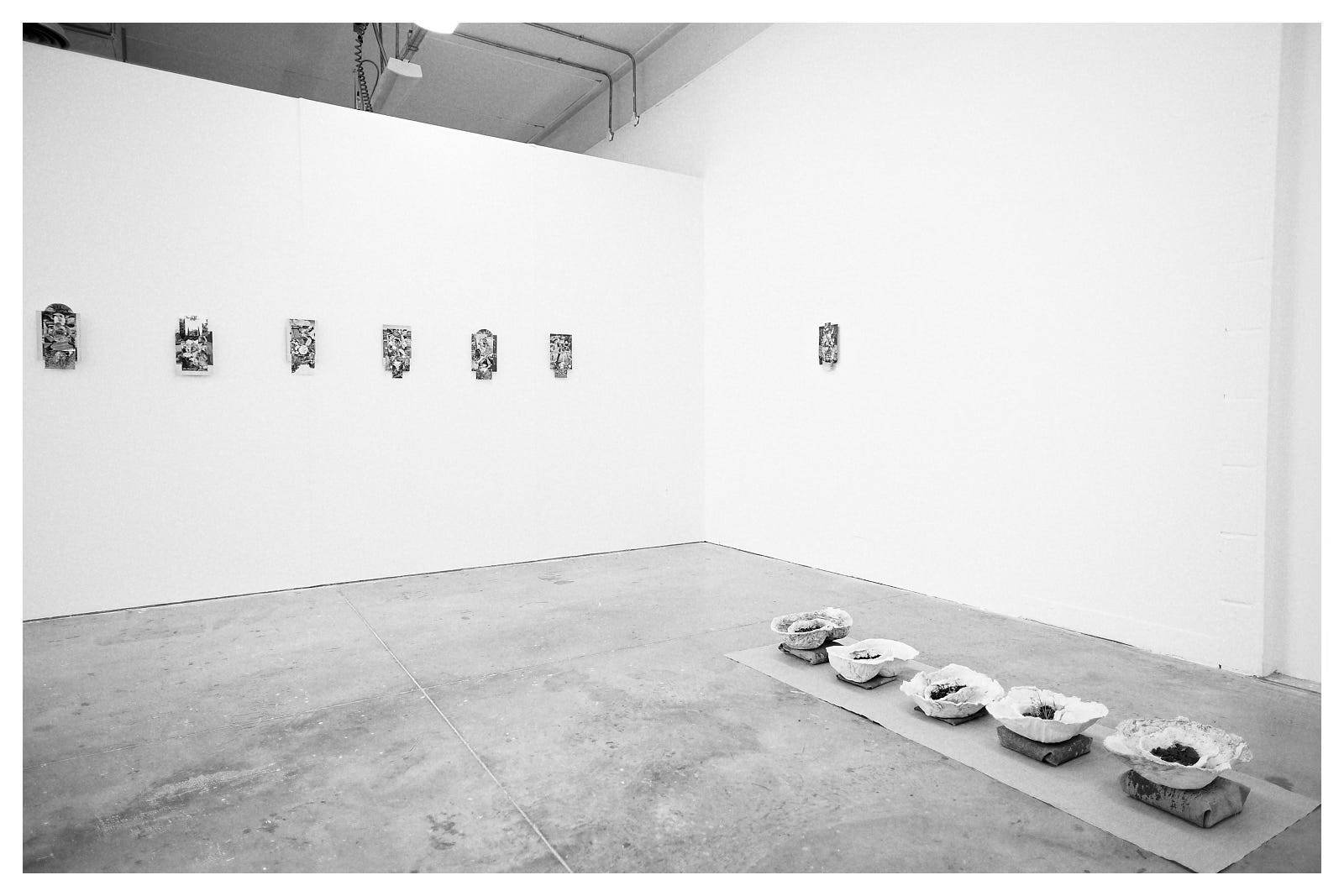
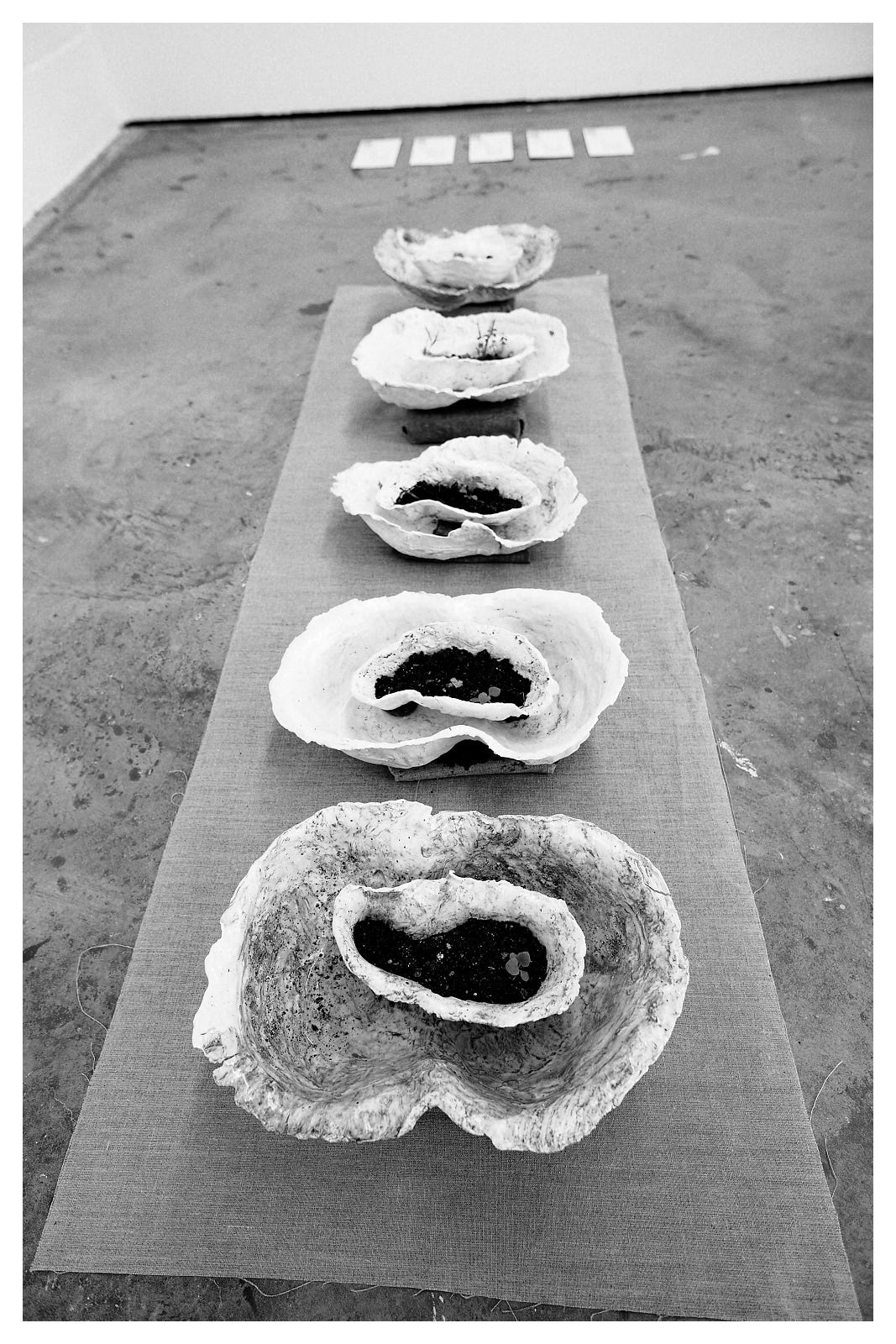
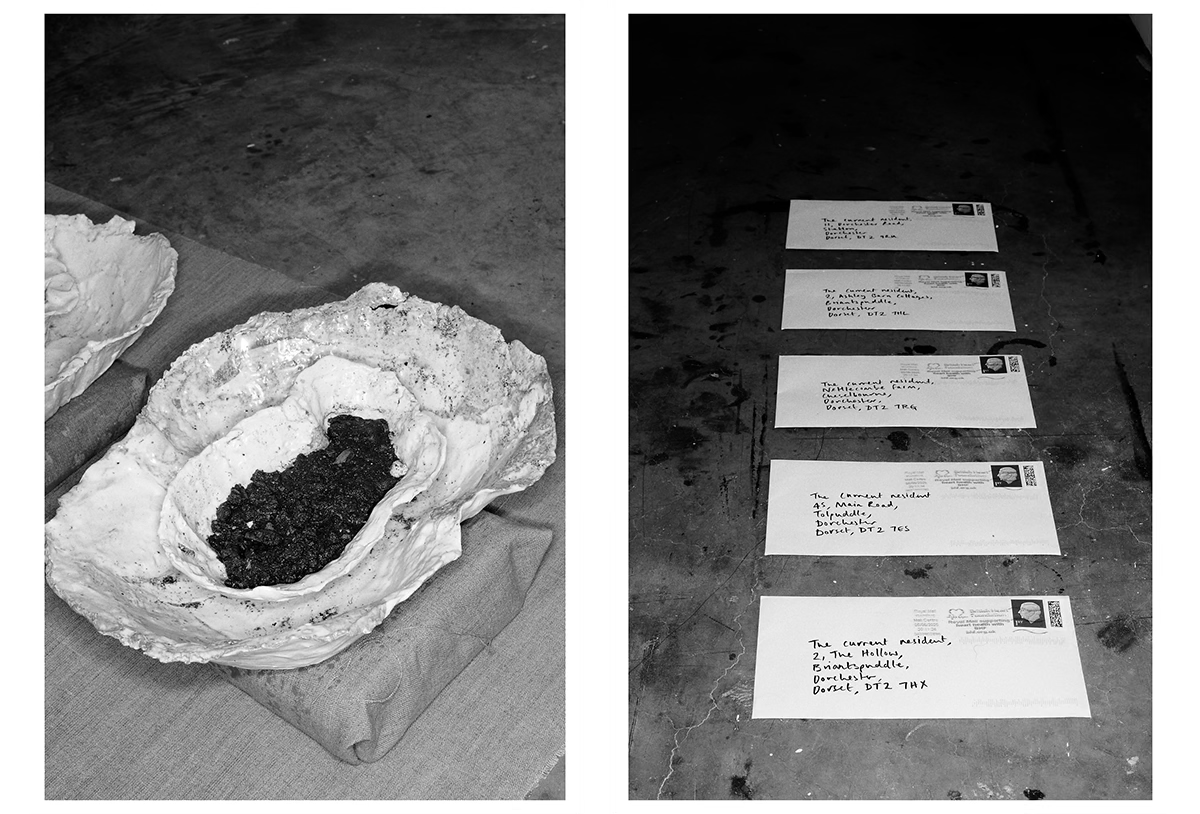
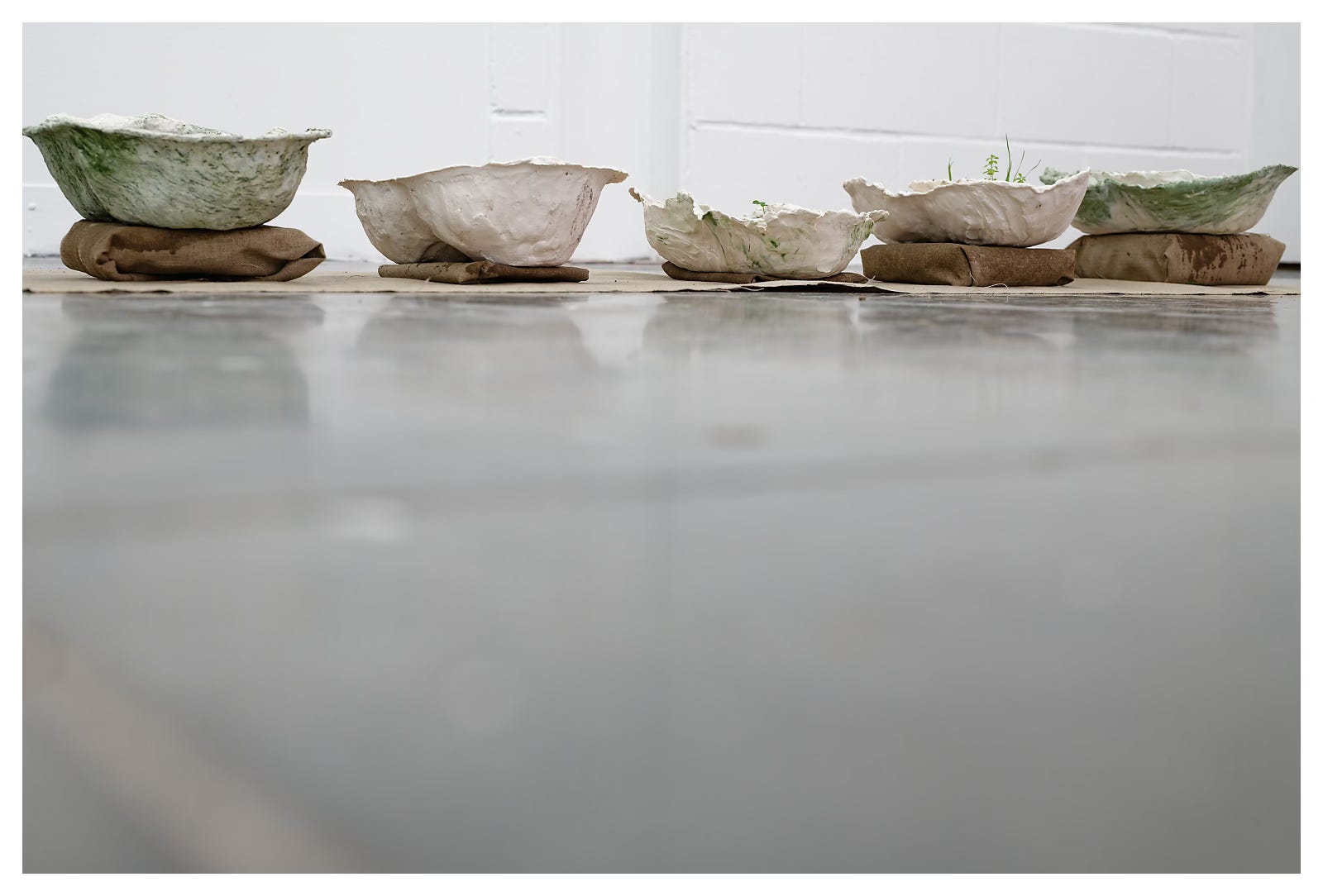
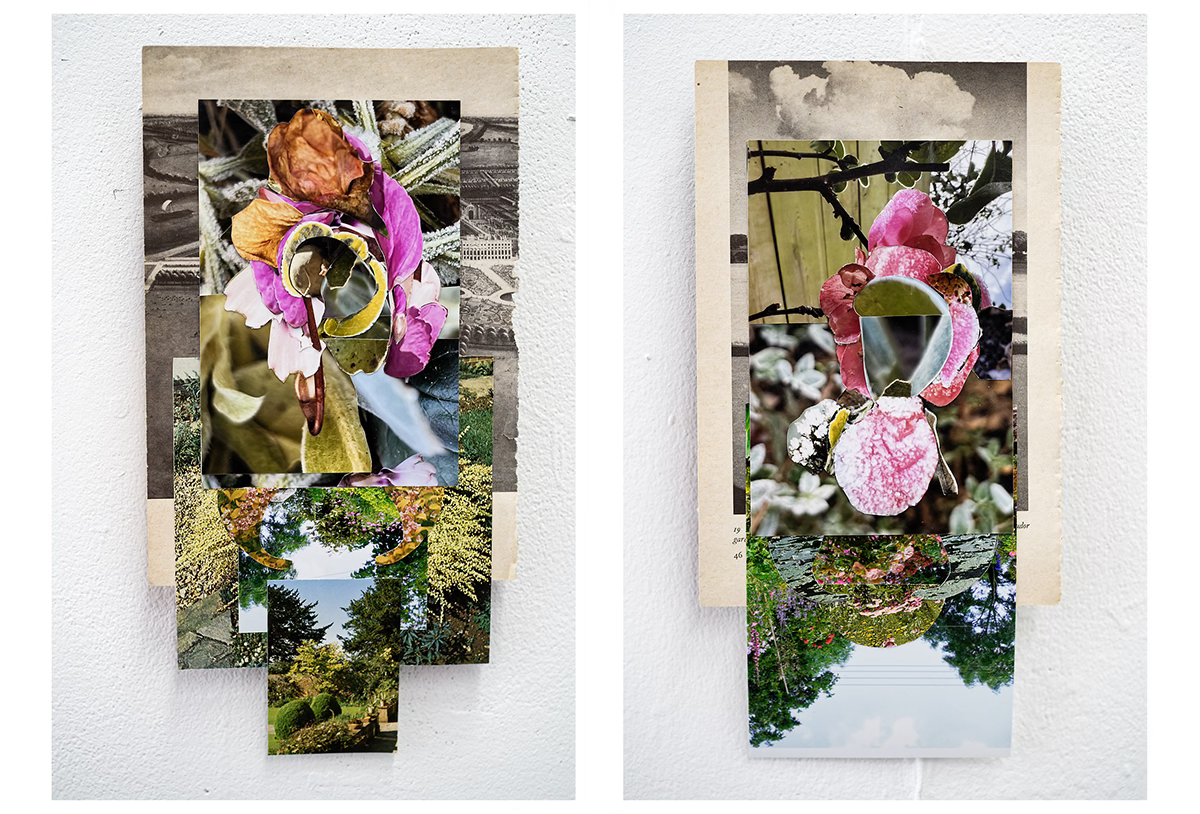
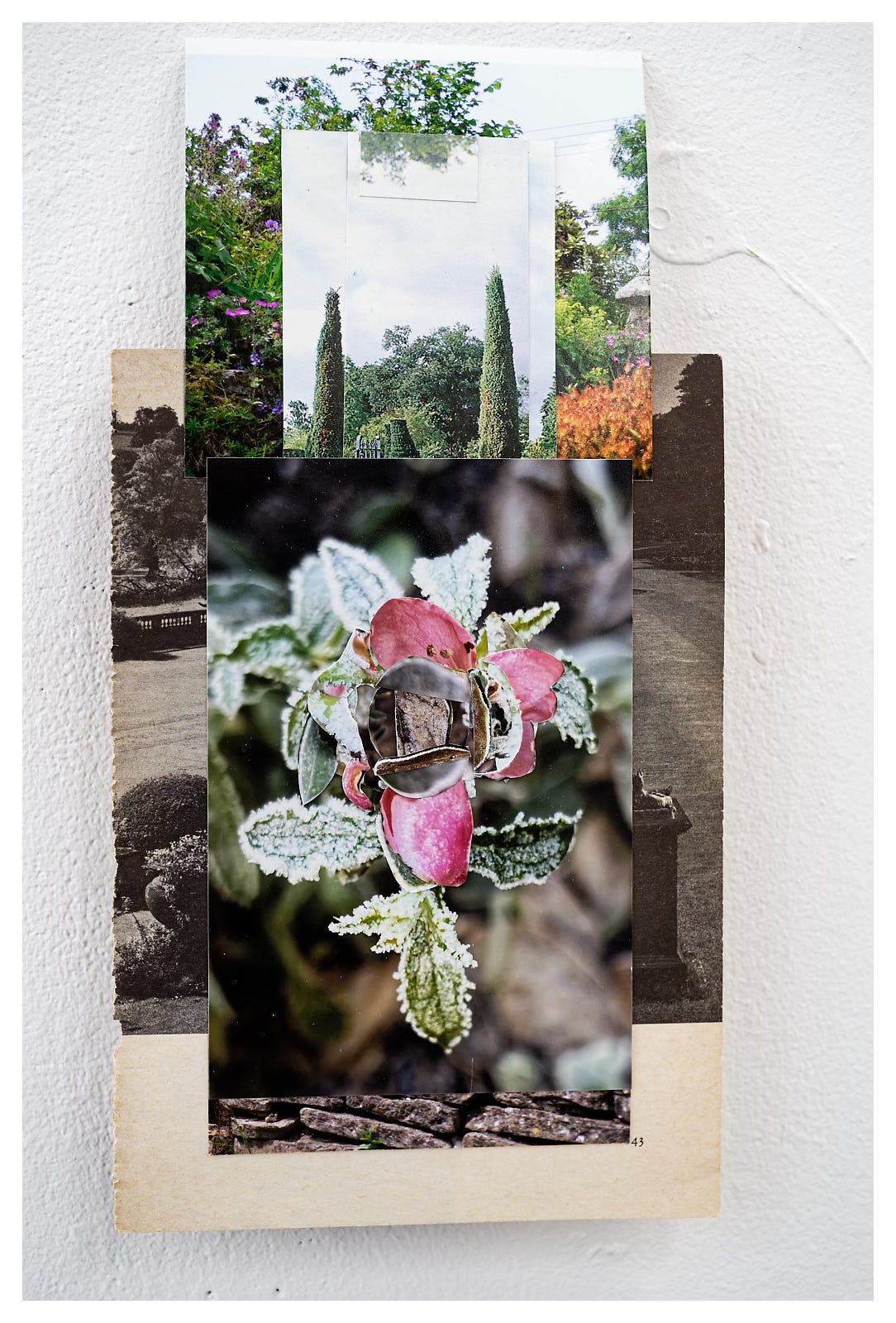
Inspired by the potential in my grandad’s pot of soil, I recently travelled back to my five childhood gardens, collecting soil from each. My dad was a farm manager and ours was not an unusual story, in that it was necessary to move frequently between tied farm housing. For us, every new garden, whilst reflecting the unfamiliar landscape, also carried something of the characteristics of our preceding garden. This was helped by my parents’ determination to take on every move several tons of flagstone, walling and nine greensand staddle stones, transforming our new garden into a partial iteration of the one we needed to leave behind. These gardens became a source of continuity and in their relative familiarity, suggested home far more than each new house. Returning to these places for the first time since childhood, I am intrigued by what treasures might be hidden in their soil and through careful tending what latent seeds might grow. I’m not sure whether I am revisiting the past or imagining a future, but already tiny green shoots are appearing. I have become my child-like self, and each small pot of soil, a complete garden full of wonder and possibility.
Text © Jane Thurley
Photographs © Jon C Archdeacon